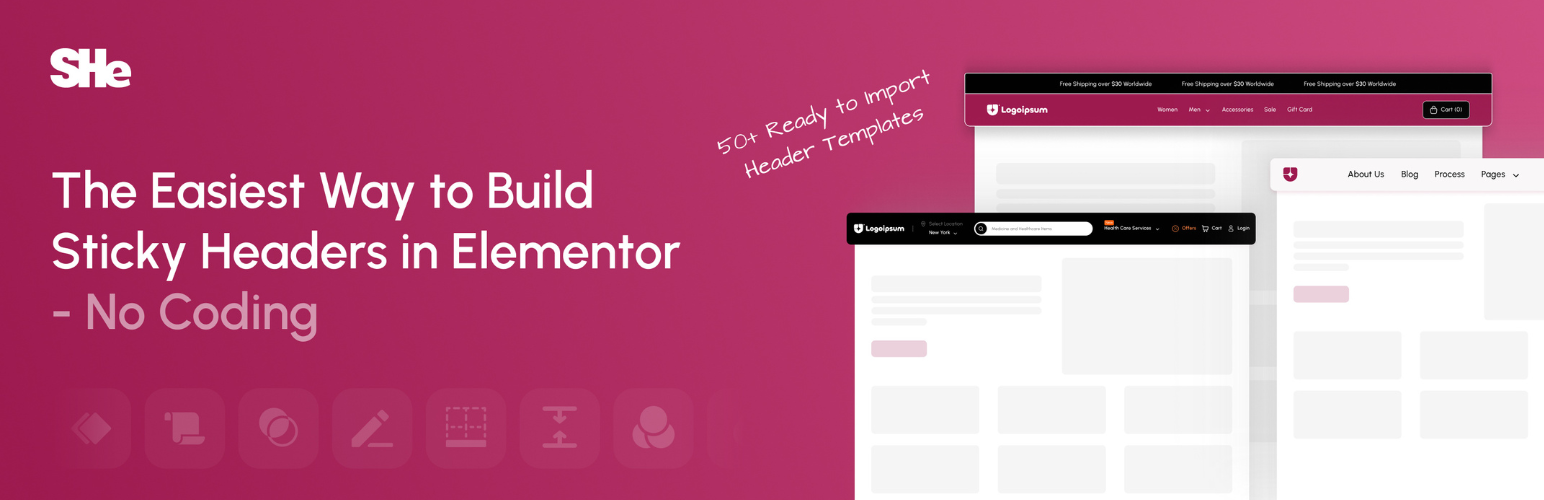
Create advanced Elementor sticky headers with scroll effects: blur, shrink, hide on scroll, plus full responsi...
Free
300k+ installs 4.5★ (68)
This plugin automatically adds CSS3 transitions to your website/blog and the WordPress admin. Links, etc. get animated transitions between their norma …

CSS3 Transitions is a WordPress plugin that adds animated transitions to various elements of your website or blog, including links, list items, images, and form fields. It targets elements with defined hover or focus states, creating a smoother visual experience when users interact with these components. The plugin is suitable for those looking to enhance the user interface of their site with subtle animations.
The plugin supports all major browsers, ensuring that users with outdated browsers will still see the standard behaviour without transitions. However, it has limitations with image sprites, which may cause unexpected animations unless specific styles are applied to override the plugin's effects.
Best for: This plugin is best for users who want to improve the visual appeal of their WordPress sites with animations.
What it does well
Where it falls short
CSS3 Transitions offers a straightforward solution for adding animations to your site, but it may require adjustments for specific elements like image sprites.
Nick Halsey's own description of CSS3 Transitions, lightly tidied.
This plugin automatically adds CSS3 transitions to your website/blog and the WordPress admin. Links, etc. get animated transitions between their normal and hover states. CSS3 Transitions are supported by the most recent version of every major browser (Chrome, Internet Explorer 10, Firefox, Opera, Safari); browsers without support will continue to render everything as they had before. This plugin adds the transitions (eye candy) to all <a> (link), <li> (list item, usually used in navigation menus), <img> (image), and <input> (form field and button) tags that have a hover or focus state defined (for example, if links change color when the mouse hovers over them). Other “buttons”, form elements, and WordPress-specific selectors are also targeted. Transitions are between .2 and .3 seconds in duration, so they shouldn’t cross the line between nice and distracting; however, depending on the colors used in your theme, the transitions may not be noticeable.
Also, please note that image sprites simply don’t work well with blanket css3 transitions. If you see wierd animations where images scroll between their normal and hover states, they’re using sprites. Depending on where the sprites are used, there are various ways to prevent the behavior on those elements, while retaining transitions where desired. One method is to add an inline style attribute to those elements: style="transition: none; -webkit-transition: none;". Adding the css to your theme will override the plugin’s css as long as you target the elements using sprites by class or id.
Please feel free to offer any feature suggestions you might have and I will consider them for future releases.
Because of the way our brains process images, in simple terms, instant/sudden changes are generally not as well perceived as more gradual ones. In the physical space, we never see instant changes, like slides changing with no animation in a PowerPoint, but with digital technology this is a very common practice. When websites make use of hover states, for example, if a link changes color when the mouse hovers over it, they exhibit small, but instant visual changes. Adding the css3 transitions makes these changes more gradual, and therefore easier on the eye. For this same reason, operating systems now tend to make use of a lot of animations. There’s a lot of neuroscience behind these concepts, but I’m not well versed in that. Basically, slight animations generally look better than instant changes. Some people will argue that things aren’t as “snappy” or seem slugish with transitions, but if that’s the case, it’s only a matter of adjusting the animation timing function and duration.
Other plugins for animations.
Create advanced Elementor sticky headers with scroll effects: blur, shrink, hide on scroll, plus full responsi...

Add CSS animations and scroll effects to any Gutenberg block. Choose from fade, slide, zoom & more, with d...

Create WordPress websites with free forms, Gutenberg blocks, popups, sliders, countdowns, animations, pre-buil...
Add creative image hover effects to Elementor page builder. Easily customize title and content and effects wit...
Easy to use advanced Parallax, Image and Video backgrounds block plugin with parallax and video support.

Elevate your website game with the Bricksable collection of premium elements for Bricks Builder. Designed to s...