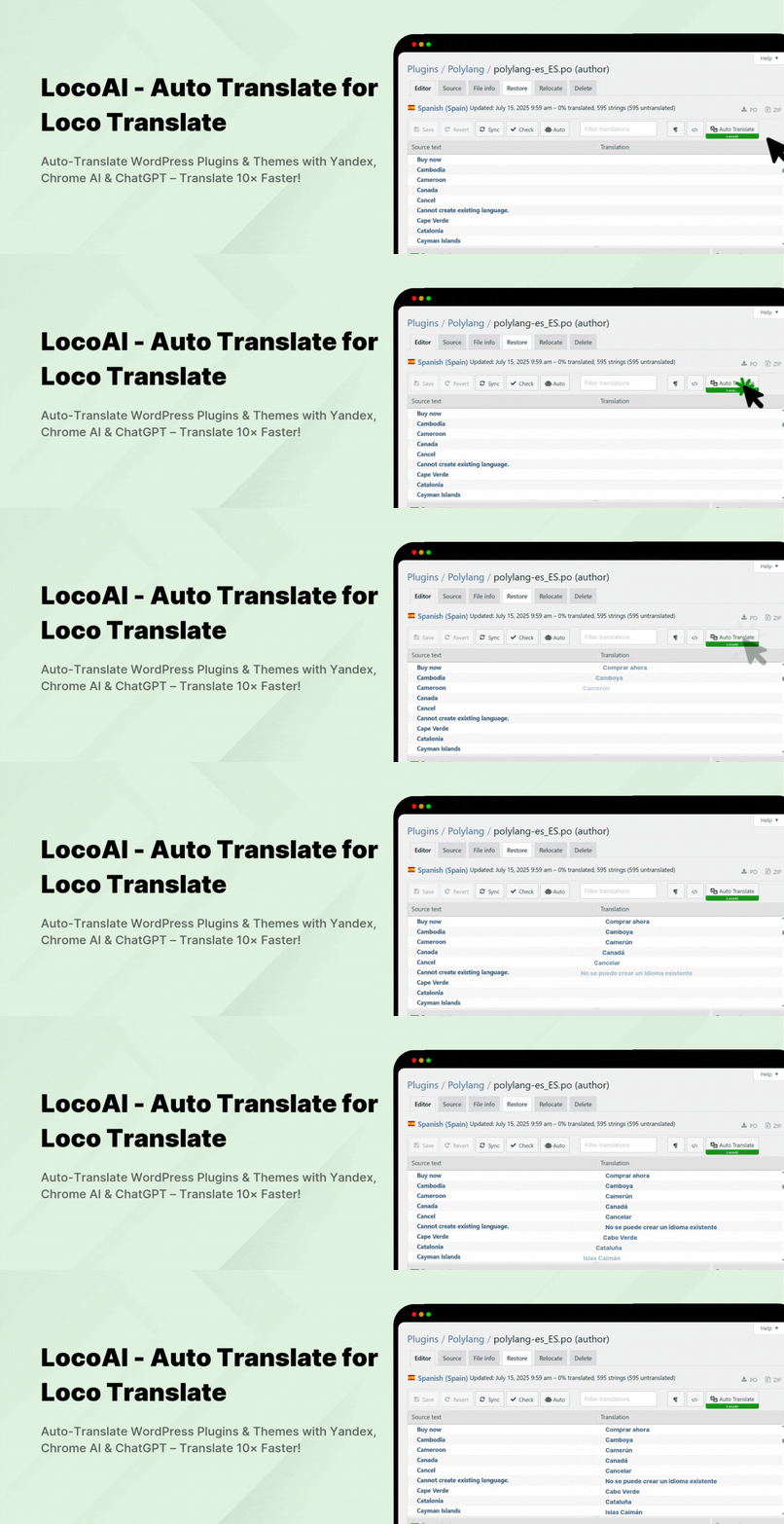
LocoAI
89LocoAI - Auto Translate For Loco Translate is a powerful tool for developers looking to quickly translate thei...
Free
70k+ installs 4.9★ (637)
Add gutenberg blocks data into the post / page REST API endpoints.

REST API blocks is a WordPress plugin that adds block data in JSON format to the REST API. Once installed, it introduces two new fields: 'has_blocks' and 'blocks', which provide information about blocks used in posts or pages.
This plugin is designed for developers who need to access block data through the REST API, facilitating integration with other applications or services that use this data format.
Best for: Developers looking to integrate block data into applications using the WordPress REST API.
What it does well
Where it falls short
REST API blocks offers a straightforward solution for accessing block data via the REST API, though it may not provide extensive features beyond this functionality.
Jonny Harris's own description of REST API blocks, lightly tidied.
A simple plugin to add block data in json format into the rest api. Once installed, there will be two new fields added to the rest api, has_blocks and blocks.
For example output.
"has_blocks": true,
"block_data": [
  {
    "blockName": "core/image",
    "attrs": {
      "url": "https://www.spacedmonkey.com/wp-content/uploads/2018/12/test-image.jpg",
      "alt": "Terminal de aeropuerto",
      "caption": "fsfsdfdsfdssfd",
      "href": "https://www.spacedmonkey.com/test-image",
      "rel": "noreferrer noopener",
      "linkClass": "jonny-123",
      "linkTarget": "_blank",
      "id": 147355,
      "width": 582,
      "height": 327,
      "linkDestination": "attachment"
    },
    "innerBlocks": [
    ],
    "innerHTML": "\n<figure class=\"wp-block-image is-resized\"><a class=\"jonny-123\" href=\"https://www.spacedmonkey.com/test-image\" target=\"_blank\" rel=\"noreferrer noopener\"><img src=\"https://www.spacedmonkey.com/wp-content/uploads/2018/12/test-image.jpg\" alt=\"Terminal de aeropuerto\" class=\"wp-image-147355\" width=\"582\" height=\"327\"/></a><figcaption>fsfsdfdsfdssfd</figcaption></figure>\n",
    "innerContent": [
      "\n<figure class=\"wp-block-image is-resized\"><a class=\"jonny-123\" href=\"https://www.spacedmonkey.com/test-image\" target=\"_blank\" rel=\"noreferrer noopener\"><img src=\"https://www.spacedmonkey.com/wp-content/uploads/2018/12/test-image.jpg\" alt=\"Terminal de aeropuerto\" class=\"wp-image-147355\" width=\"582\" height=\"327\"/></a><figcaption>fsfsdfdsfdssfd</figcaption></figure>\n"
    ],
    "rendered": "\n<figure class=\"wp-block-image is-resized\"><a class=\"jonny-123\" href=\"https://www.spacedmonkey.com/test-image\" target=\"_blank\" rel=\"noreferrer noopener\"><img src=\"https://www.spacedmonkey.com/wp-content/uploads/2018/12/test-image.jpg\" alt=\"Terminal de aeropuerto\" class=\"wp-image-147355\" width=\"582\" height=\"327\"/></a><figcaption>fsfsdfdsfdssfd</figcaption></figure>\n"
  }
],
This plugin uses @wordpress/env for local development and testing.
Install dependencies:
bash
npm install
composer install
Start the WordPress environment:
bash
npm run env:start
This will start a local WordPress instance at http://localhost:8888 (admin: http://localhost:8888/wp-admin with username admin and password password)
Note: Docker must be running for this to work. The first time you run this, it will download WordPress and set up the database, which may take a few minutes.
npm run env:start – Start the WordPress environmentnpm run env:stop – Stop the WordPress environmentnpm run env:reset – Reset the environment (clean database)npm run env:destroy – Destroy the environment completelynpm run test:php – Run PHPUnit testsnpm run test:php:multisite – Run PHPUnit tests in multisite modenpm run lint:php – Run PHP CodeSniffernpm run lint:php:fix – Fix PHP coding standards issues automaticallyAfter starting the environment with npm run env:start, you can run the tests:
`bash
npm run test:php
`
For multisite tests:
Other plugins for integrating services.
LocoAI - Auto Translate For Loco Translate is a powerful tool for developers looking to quickly translate thei...
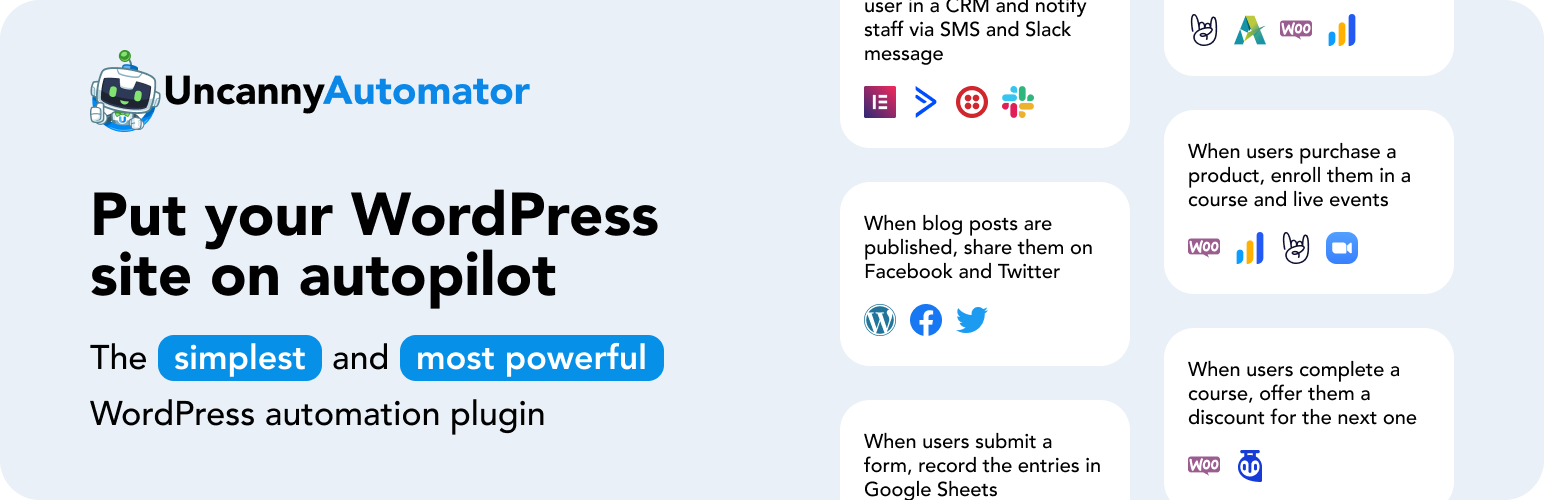
The AI + Automation plugin for WordPress. Automate workflows across all your plugins and apps, add an AI agent...

Create custom interactive maps with free Leaflet-based styles, no Google Maps API key, frontend marker submiss...
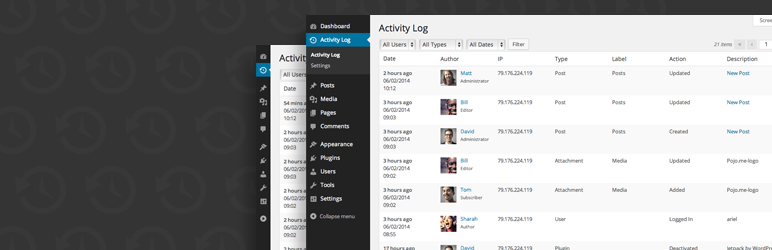
Monitor every change on your WordPress site — who did what, when, and where it came from — for a complete audi...

No API key required. Display Yelp and Google reviews for any business in a clean, customizable feed on your si...
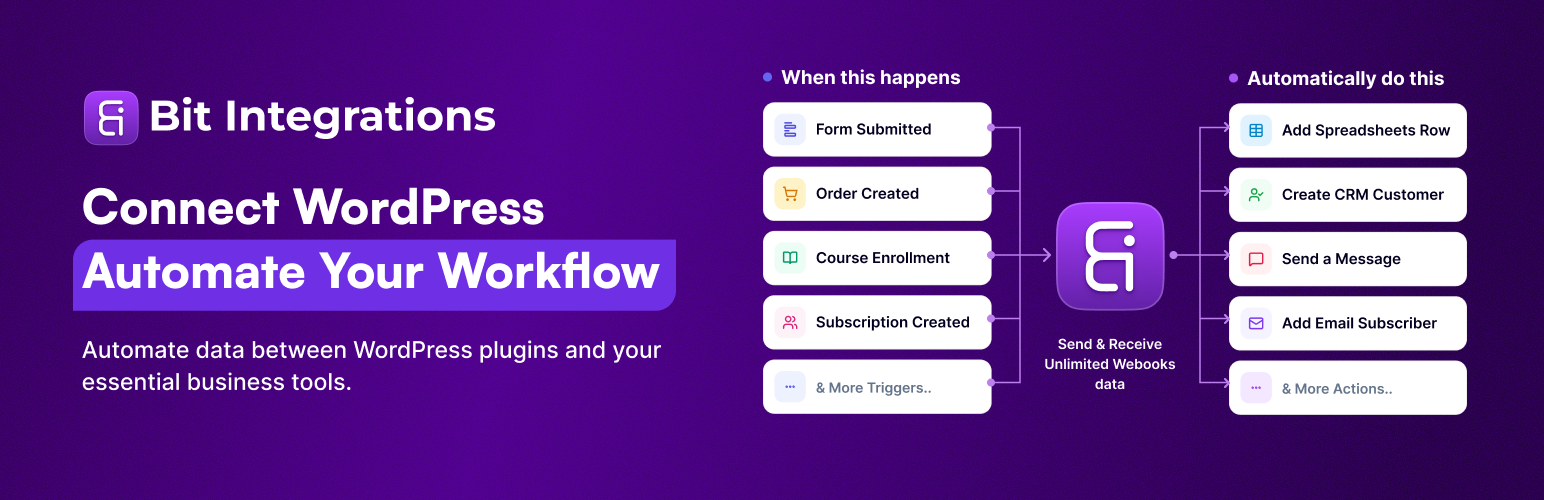
Contact Form, Google Sheet, MailChimp, Brevo, Webhook, Zoho CRM Automation and Integration plugin that Connect...