
Backup, restore or migrate your WordPress website to another host or domain. Schedule backups or run manually....
Free
3M+ installs 4.8★ (8,631)
Manages your WordPress database.
WP-DBManager is a WordPress plugin designed to manage your site's database. It allows you to back up, restore, optimize, and repair your database directly from the WordPress admin interface. You can also schedule these tasks and receive email notifications upon completion.
This plugin is suitable for users who want to maintain their database without needing to use command-line tools or phpMyAdmin. It offers a straightforward way to handle database operations, making it accessible for those with varying levels of technical expertise.
Best for: This plugin is best for WordPress site owners looking for an easy way to manage their database.
What it does well
Where it falls short
WP-DBManager offers essential database management features in a user-friendly format. It may be a useful tool for those seeking to streamline their database maintenance tasks.
Lester Chan's own description of WP-DBManager, lightly tidied.
WP-DBManager looks after the database behind your site: it backs it up, restores it, optimizes and repairs it, empties or drops tables and runs queries you write, all from wp-admin rather than from a shell or phpMyAdmin. Backups, optimization and repair can be left to run on a schedule, and the backup can be emailed to you when it finishes.
I spent most of my free time creating, updating, maintaining and supporting these plugins, if you really love my plugins and could spare me a couple of bucks, I will really appreciate it. If not feel free to use it without any obligations.
A database backup contains everything, including your users table. Anyone who can guess a backup file name can download the lot, so the folder must not be served over HTTP.
The reliable option, on any server: set Path To Backup under WP-Admin -> Database -> Settings to a folder outside your web root, for example /var/www/example.com/backup-db when WordPress lives in /var/www/example.com/public_html. Nothing served, nothing to configure.
If the folder has to stay inside the web root:
htaccess.txt from Folder: wp-content/plugins/wp-dbmanager to Folder: wp-content/backup-db/.htaccessWeb.config.txt from Folder: wp-content/plugins/wp-dbmanager to Folder: wp-content/backup-db/Web.config.htaccess files, so the file above does nothing. Add this to your server block and reload nginx:location ^~ /wp-content/backup-db/ { deny all; }
Move index.php from Folder: wp-content/plugins/wp-dbmanager to Folder: wp-content/backup-db/index.php as well, so the folder cannot be listed.
The Backup DB page requests a file from the folder and reports what the server actually returns, so you can confirm the folder is closed rather than assume it.
wp dbmanager tables
wp dbmanager backups
wp dbmanager backup --yes
wp dbmanager backup --no-gzip --yes
wp dbmanager restore <file> --yes
wp dbmanager delete <file>... --yes
wp dbmanager email <file> --to=ops@example.org --yes
wp dbmanager optimize --all --yes
wp dbmanager repair wp_options --yes
wp dbmanager empty <table>... --yes
wp dbmanager drop <table>... --yes
Everything that changes anything asks first, so a script has to pass --yes. That includes backup, which deletes the oldest backups to stay inside Maximum Backup Files, and email, because a dump holds your users table and a sent message cannot be recalled. tables and backups only read, and take a --format of table, csv, json, yaml, count or ids; their sizes are in bytes rather than the KiB and MiB the screens print, because a shell is better at arithmetic than at parsing 1.2 MiB.
optimize and `repair` take table names or `--all`. `empty` and `drop` take names only: emptying or dropping every table in a database is not maintenance, and the screen at least shows you the list before you tick it.
Other plugins for backups.
Backup, restore or migrate your WordPress website to another host or domain. Schedule backups or run manually....
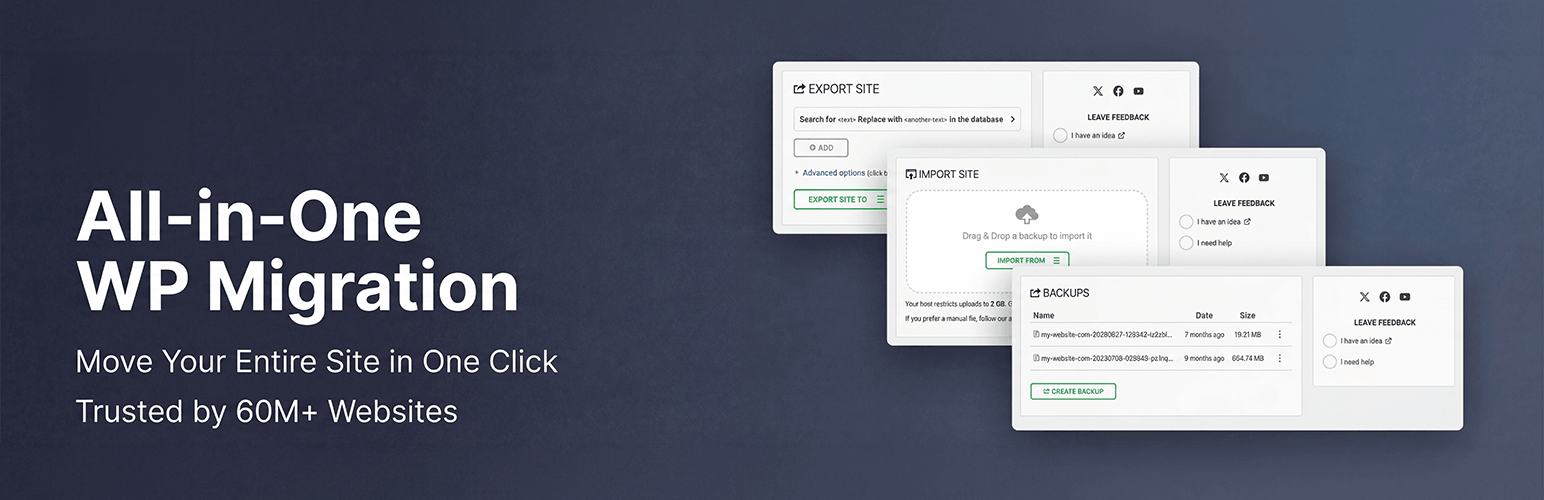
Trusted by 60M+ sites: The gold standard for WordPress migration and backup. Migrate, backup, and restore your...
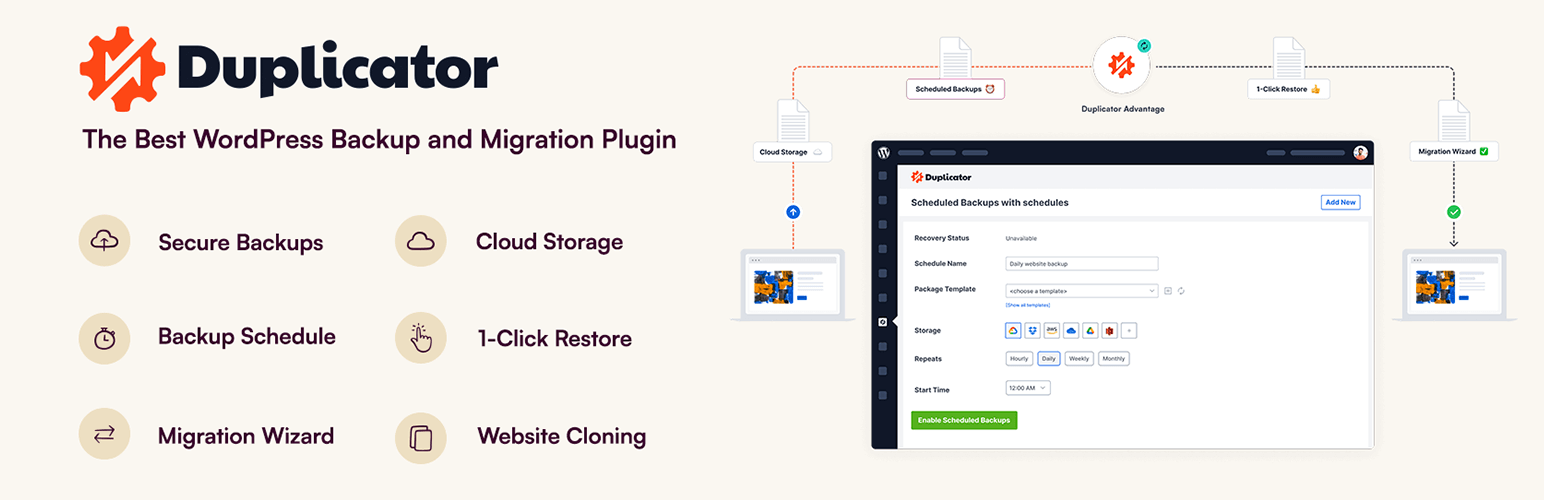
The best WordPress backup and migration plugin. Quickly and easily backup ,migrate, copy, move, or clone your...

All-in-one WordPress backup, migration and staging plugin — schedule automatic backups, restore in one click,...

Disable Gutenberg Block Editor and restore the Classic Editor and original Edit Post screen (TinyMCE, meta box...

WordPress backup plugin: backups, restore & migration in minutes. Clone or duplicate your site, test updat...