Ad Inserter
94Manage Google AdSense ads, banners, ad rotation, sticky widgets, AMP ads, ads.txt, tracking, header and footer...
Free
300k+ installs 4.9★ (2,428)
Insanely easy and attractive custom post types, custom post meta, and custom taxonomies

SuperCPT is a WordPress plugin designed for developers who work with Custom Post Types, Custom Taxonomies, and Custom Post Meta. It streamlines the process by automatically adding names to labels and allowing default options for Custom Post Types and Taxonomies. The plugin also enhances the appearance of custom fields with styling and provides a selection of icons from Font Awesome.
This plugin is suitable for coders looking to simplify their workflow when creating and managing custom content types in WordPress. It is particularly useful for those familiar with coding and looking for a more efficient way to handle custom post types and taxonomies.
Best for: Developers who need to manage Custom Post Types and Taxonomies in WordPress.
What it does well
Where it falls short
SuperCPT is a practical tool for coders looking to enhance their workflow with custom content types, though its age may limit its compatibility with the latest WordPress updates.
Matthew Boynes's own description of SuperCPT, lightly tidied.
SuperCPT now uses Font Awesome instead of Glyphicons. Some icon names will carry over, but not all. If this is a considerable inconvenience for you for a project, simply do not update it. It’s not a security release, so updating isn’t necessary.
SuperCPT is an object wrapper for Custom Post Types, Custom Taxonomies, and Custom Post Meta “for coders, by coders.” Simply put, SuperCPT:
If you use TextMate, Sublime Text 2, or another editor which supports TextMate bundles, check out this set of snippets to turbo-charge your development.
See the Other Notes tab for instructions and demo code. Find more demos and a full reference at GitHub.
Since you’re a hard-core coder, check this out on GitHub if you want to contribute!
Depending on when and where you’re declaring your Custom Post Types and Taxonomies, you have different options for which action to hook onto. after_setup_theme is the safest bet, but if you’re referencing this in another plugin, plugins_loaded is a good choice. To avoid a fatal error if something goes awry, you should check to see if the class Super_Custom_Post_Type exists before referencing it. Don’t worry about keeping up, reference code is below.
To define a new Custom Post Type, instantiate the Super_Custom_Post_Type class with a string for the post type. For example,
$movies = new Super_Custom_Post_Type( 'movie' );
Other plugins for custom content structures.
Manage Google AdSense ads, banners, ad rotation, sticky widgets, AMP ads, ads.txt, tracking, header and footer...
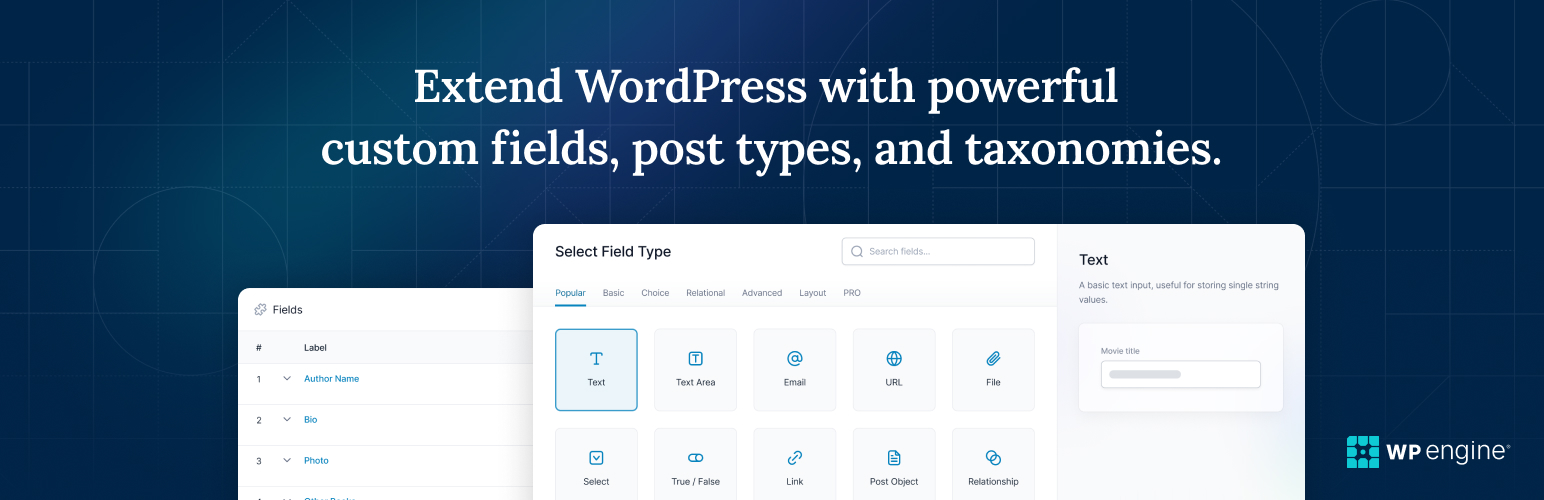
ACF helps customize WordPress with powerful, professional and intuitive fields. Proudly powering over 2 millio...
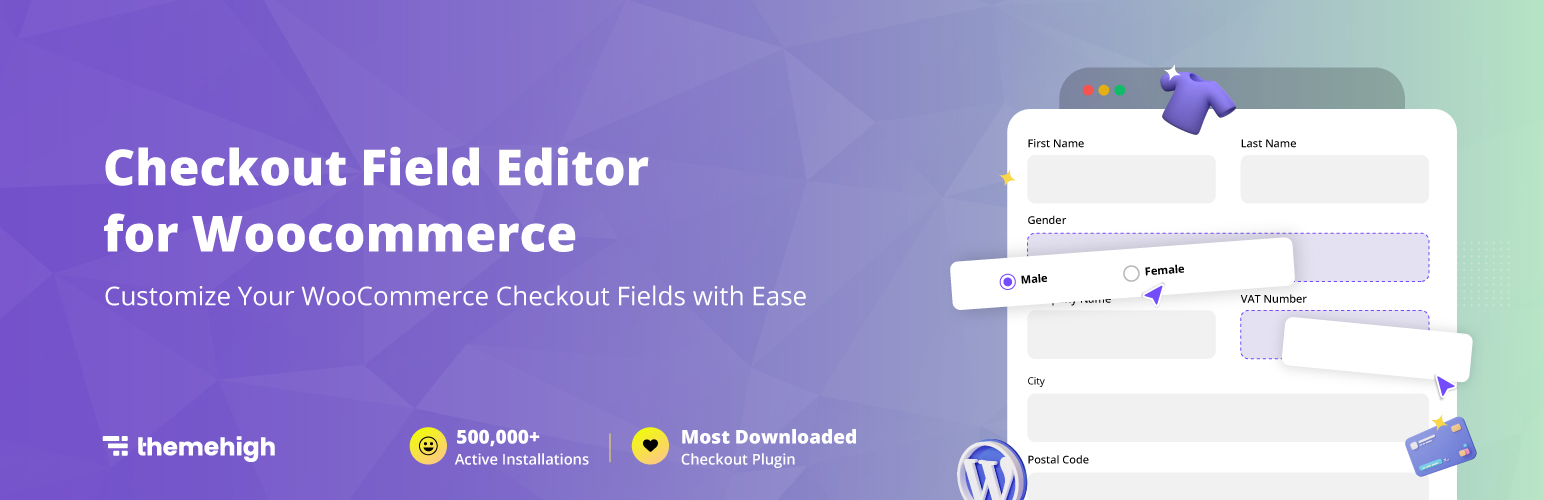
Checkout Field Editor (Checkout Manager) for WooCommerce – The best WooCommerce checkout manager plugin to man...

Easily reorder posts, pages, custom post types, and taxonomies with intuitive drag-and-drop sorting in the Wor...

The #1 user-rated activity log plugin for event logging, activity monitoring and change tracking.
Admin UI for creating custom content types like post types and taxonomies